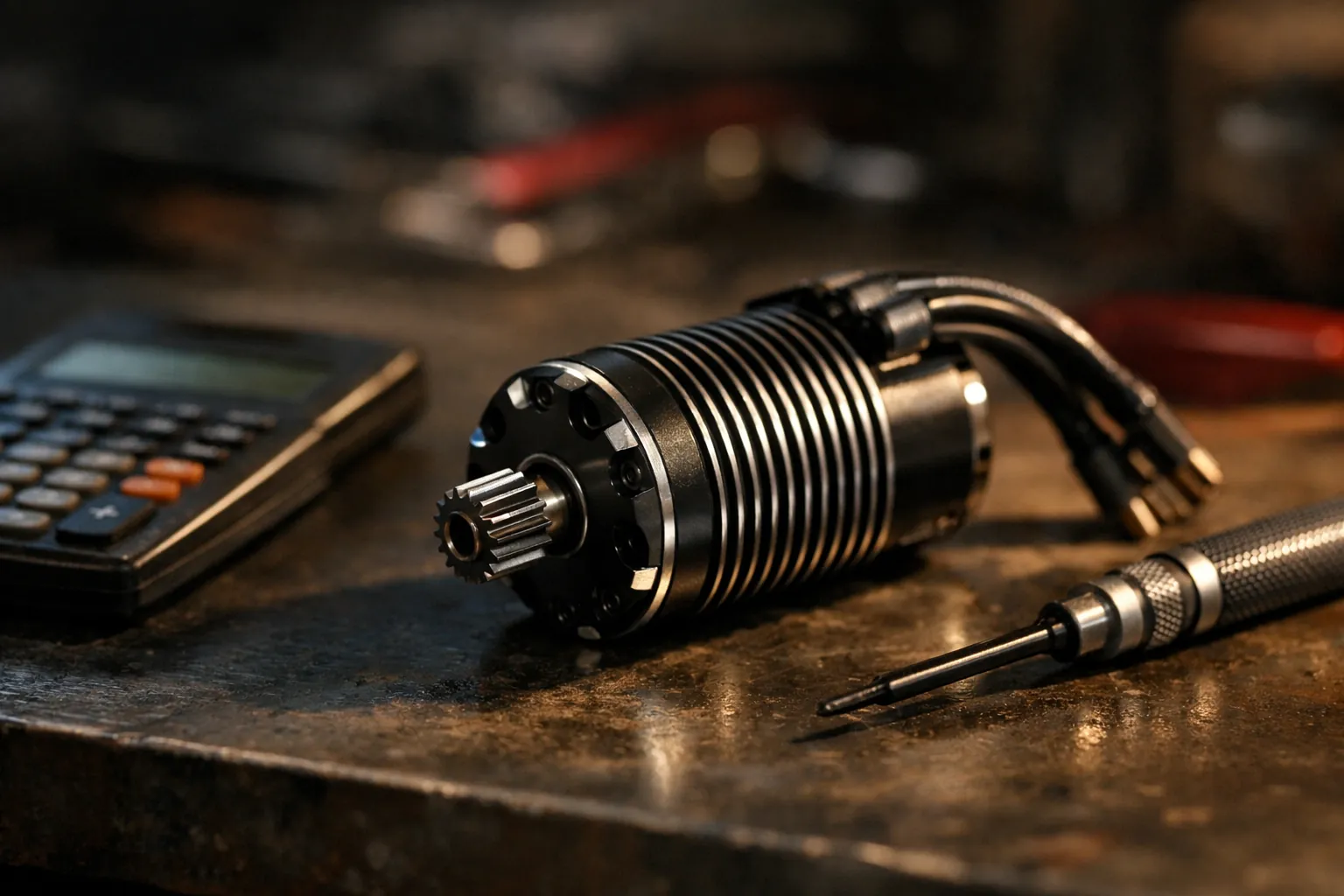
KV is how many rpm a brushless motor spins per volt, with no load. Multiply it by your battery voltage to get its theoretical top rpm. That's all it is: not power, not torque, not quality. A higher KV spins faster on the same battery; a lower KV suits higher-voltage batteries and heavier trucks. The right KV depends on your battery, your gearing and your truck's weight.
How we put this together
This is an explainer. The motor examples below come from real manufacturer listings on Amazon, checked October 3, 2026, so you can see actual KV numbers in context. The rpm figures are simple arithmetic (KV × voltage) and are theoretical no-load values, not measurements. How we research.
The KV formula
The math is one line: no-load rpm ≈ KV × voltage. Use nominal pack voltages (3.7V per LiPo cell) for an everyday estimate; a freshly charged pack starts higher.
Notice the last two bars. The 2000KV motor (the KV Traxxas lists for the Sledge's 6S system) spins about as fast as a 3800KV motor on 3S, because it gets twice the voltage. That's why big 6S and 8S trucks run lower KV motors: the voltage supplies the rpm, and the lower KV keeps current and heat manageable.
Quick rpm table
Theoretical no-load rpm for common KV ratings at nominal LiPo voltages (KV × volts). Real-world rpm under load is lower, and not every motor or ESC is rated for every voltage in this table; check both before you plug in more cells.
| Motor | 2S (7.4V) | 3S (11.1V) | 4S (14.8V) | 6S (22.2V) |
|---|---|---|---|---|
| 2,000KV | 14,800 | 22,200 | 29,600 | 44,400 |
| 3,000KV | 22,200 | 33,300 | 44,400 | 66,600 |
| 3,800KV | 28,120 | 42,180 | 56,240 | 84,360 |
| 4,300KV | 31,820 | 47,730 | 63,640 | 95,460 |
Read across a row to see why adding cells is such a big jump: going from 2S to 3S raises theoretical rpm by half. That's also why manufacturers pair low-KV motors with high-voltage trucks.
Why higher KV isn't "more power"
For a given motor size, a higher-KV winding spins faster per volt but produces less torque per amp, so it pulls more current to do the same work. More current means more heat in the motor, ESC, battery and connectors. Push a high-KV motor in a heavy truck and it can overheat before it ever reaches top speed.
| Going to a… | On the same battery you get | Watch out for |
|---|---|---|
| Higher KV | More top-end rpm, faster speed potential | More current draw and heat; may need smaller pinion |
| Lower KV | More torque per amp, cooler running | Less top speed unless you add voltage or gear up |
| More voltage (more cells) | More rpm from the same motor | ESC, motor and driveline must be rated for it |
Real KV numbers from real products
KV varies enormously with the job. These figures come straight from the manufacturer listings:
| Product | KV | Use |
|---|---|---|
| Hobbywing Quicrun Fusion SE 1200KV | 1200KV | 1/10 crawlers |
| Hobbywing Quicrun Fusion SE 1800KV | 1800KV | 1/10 crawlers |
| Traxxas Sledge (VXL-6s system) | 2000 Kv | 1/8 6S monster truck |
| Redcat Ascent-18 Scout II | 3450KV outrunner | 1/18 crawler |
| Redcat Ascent-18 APEX | 3500KV (Hobbywing Mini 24) | 1/18 crawler on 3S |
| Castle Copperhead 1410 combo | 3800Kv | 1/10 sensored |
| S3650 brushless motor + 60A ESC combo | 4300KV | 1/10 budget upgrade |
Crawler motors sit at the low end because crawling needs slow, controlled torque. Small micro-crawler motors can carry high KV numbers because they're tiny and heavily geared down.
Motor size: the other half of the label
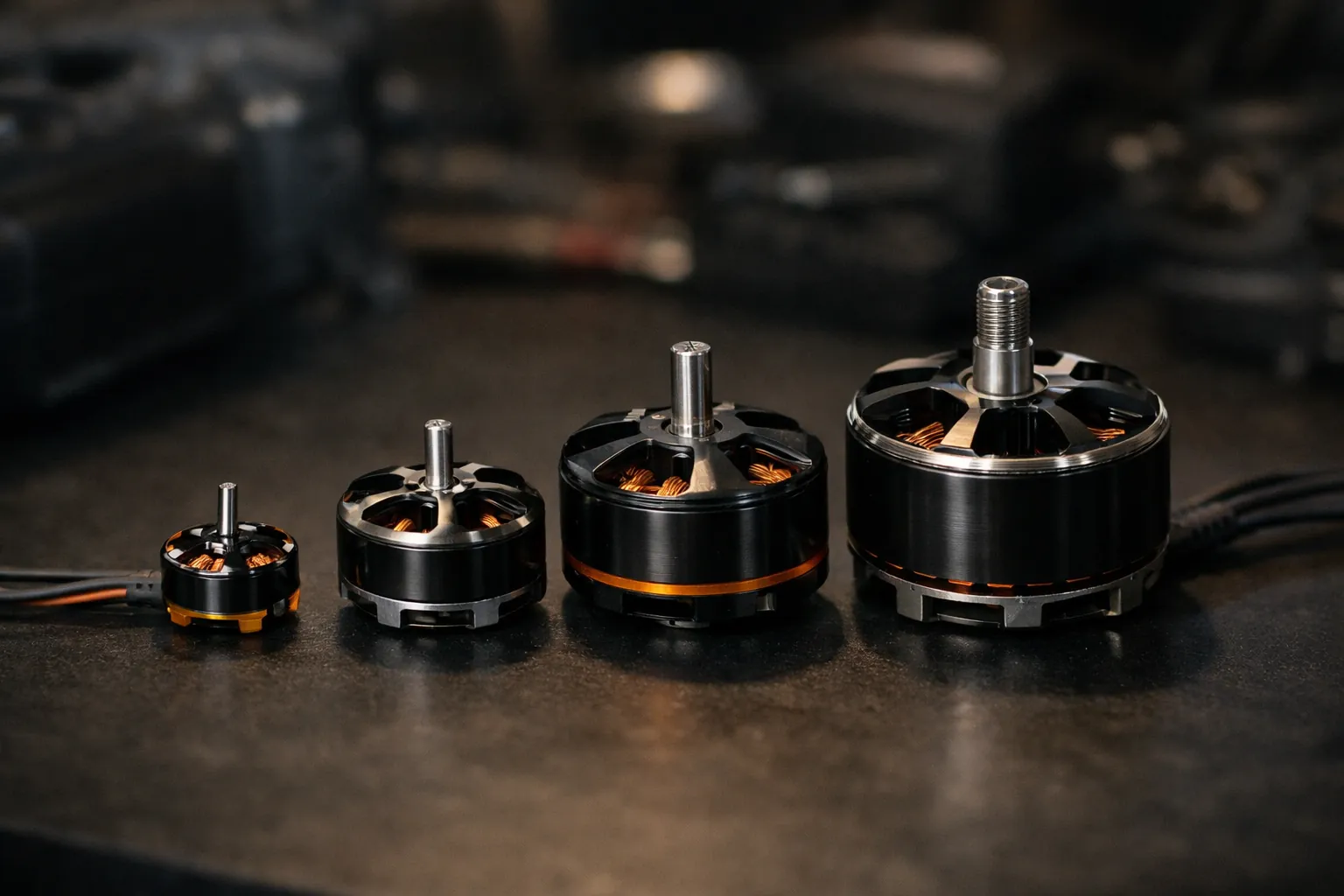
Brushless motor names often include a four-digit size code, usually the can's diameter and length in millimeters: a 3650 is roughly 36 mm × 50 mm, a 3652 slightly longer. Bigger cans hold more copper and magnet, shed heat better and handle more power. Size and KV are independent: the same 3650 can is sold in many KV windings.
| Vehicle class | Size codes seen in current listings | Example |
|---|---|---|
| 1/24 micro crawler | 1721 | INJORA MBL32 ESC + 1721 motor for SCX24 |
| 1/10 basher and SCT | 3650, 3652, 3660 | Hobbywing 10BL60 G2 + 3652SL G2 |
| 1/10 crawler | 3530 outrunner, 3660 | Hobbywing 10BL80 + Outer 3530 2200KV |
| 1/8 and larger | Check your truck's manual | Larger cans for 4S–8S |
Gearing changes the answer
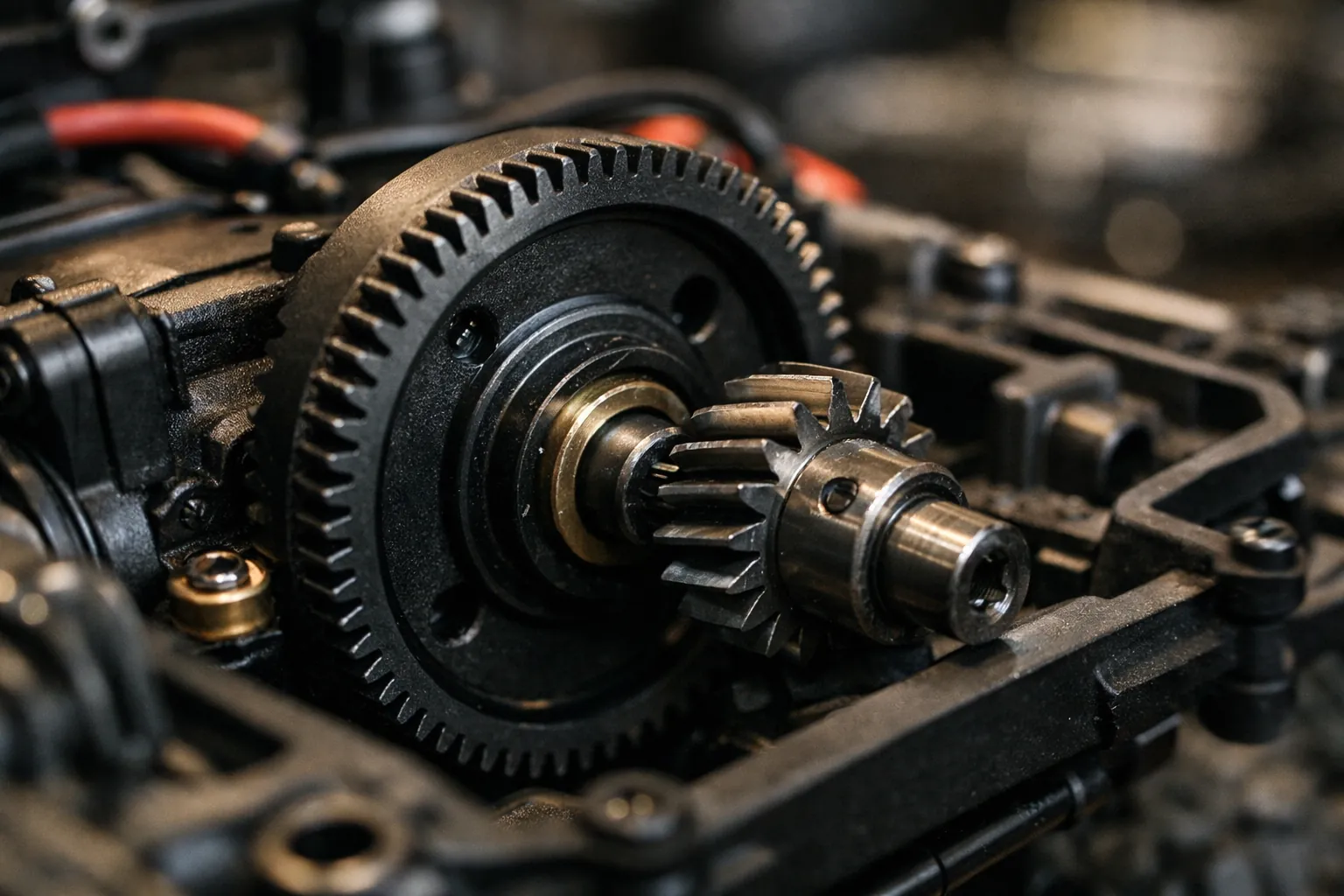
KV sets motor rpm; gearing decides how that rpm becomes wheel speed. A bigger pinion (or smaller spur) means more top speed and more load on the motor; a smaller pinion means quicker acceleration and cooler running. When you change KV or battery voltage, you often need to change the pinion too. Many truck manuals include a gearing chart for exactly this reason.
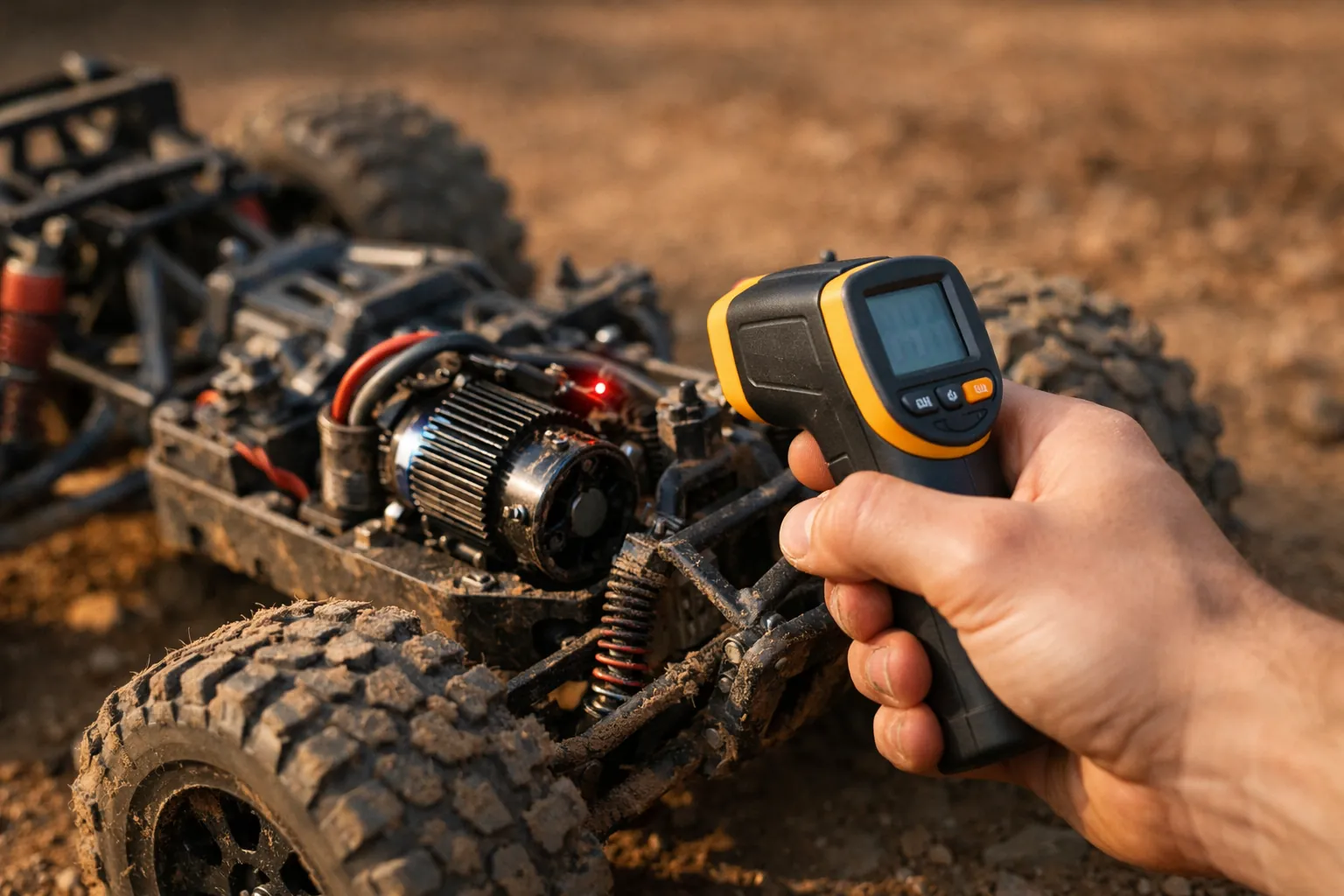
A simple habit: after a hard run, check motor temperature. If the motor is too hot to hold comfortably, gear down (smaller pinion) or reduce voltage. Most motor makers publish a maximum temperature in their manual.
How to choose KV for an upgrade
- Start with voltage. Decide your battery (2S, 3S, 4S…) and make sure the ESC is rated for it.
- Pick motor size for the vehicle. Stick to the can size your motor mount and vehicle class use.
- Pick KV for the job. Lower for heavy trucks, high voltage and crawling; higher for light vehicles on low voltage.
- Set gearing conservatively, then check temperatures and adjust.
Converting from brushed? Read brushless vs brushed first.
The bottom line
KV is rpm per volt. On its own it tells you nothing about power. Read it together with your battery voltage (KV × volts = theoretical rpm), your motor's can size and your gearing. Low KV on high voltage, like the Sledge's 2000 Kv on 6S, is how big trucks get both speed and manageable heat.
KV and size figures come from manufacturer listings, checked October 3, 2026. rpm values are calculated no-load estimates. How we research · Affiliate disclosure